
Living in Airlie Beach has its perks. You’ve got beautiful coastal views, warm weather and plenty of reasons to spend your weekends outdoors. But all that outdoor living comes with one familiar problem: where do you keep the gear? Fishing rods, camping equipment, gardening tools and paddleboards can quickly turn your garage into an obstacle course.
That’s where Storage Sheds make a real difference. A well-planned shed gives your belongings a proper home without taking over your living space. However, in Airlie Beach, you need to think beyond four walls and a roof. Tropical humidity, heavy rain, salty air and cyclone conditions all influence how well your shed performs over time.
If you’re exploring Sheds Airlie Beach, I recommend starting with a practical plan rather than choosing the first design that catches your eye. Think about what you’ll store, how often you’ll need access and what your property can comfortably accommodate. A little preparation now can save you plenty of frustration later.
1. Start With What You Actually Need to Store
Before you choose a shed size, take stock of everything you want to keep inside.
I know, measuring fishing rods and counting garden tools isn’t exactly an exciting weekend activity. But guessing how much storage you need often leads to one of two problems: a cramped shed or an unnecessarily expensive one.
Start by dividing your belongings into three groups:
- Everyday items: Lawn mowers, gardening equipment, bicycles and frequently used tools.
- Seasonal equipment: Camping gear, Christmas decorations, sporting equipment and outdoor furniture.
- Large or bulky items: Kayaks, paddleboards, workbenches and machinery.
Now consider which items need floor space and which ones can sit on shelves or wall-mounted racks.
For example, a lawn mower needs easy access near the entrance, while camping chairs can sit on an overhead rack. Likewise, long fishing rods may fit neatly along a wall rather than occupying valuable floor space.
My advice? Plan for your actual belongings first, then allow some room for future purchases.
After all, storage needs rarely get smaller.
2. Choose the Right Shed Size and Position
When planning Storage Sheds in Airlie Beach, size matters, but usable space matters even more.
A large shed with poor organisation can feel surprisingly cramped. Meanwhile, a smaller shed with smart shelving and a practical layout can handle an impressive amount of equipment.
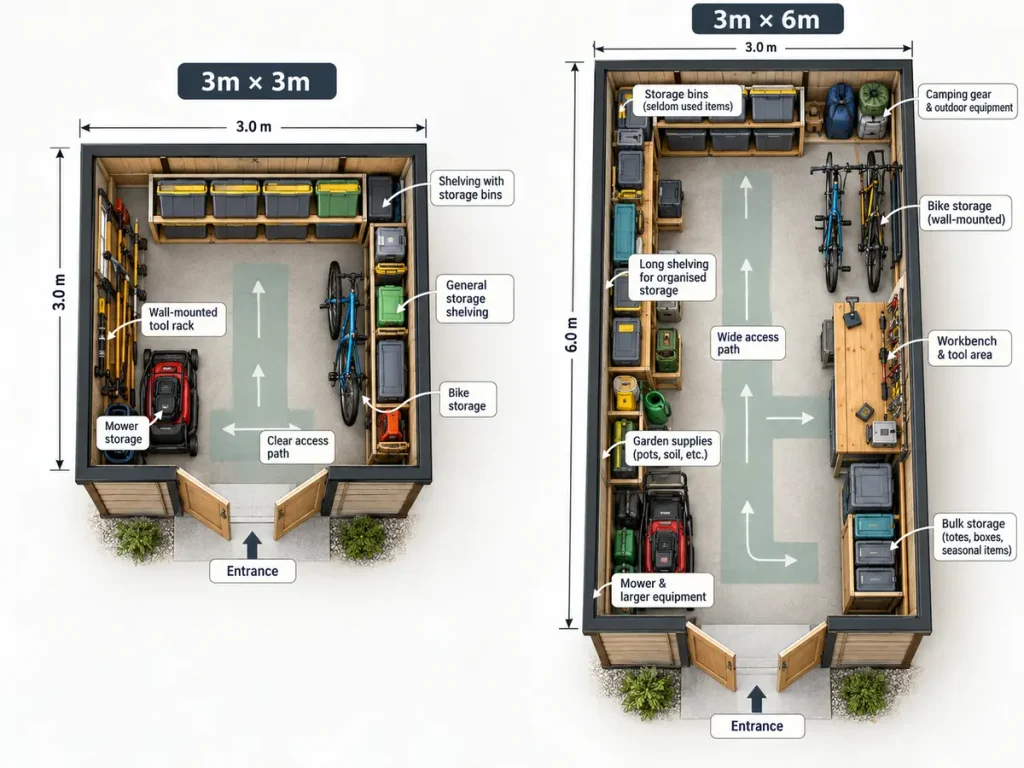
Here’s a general guide to help you compare common shed sizes.
| Shed Size | Suitable Storage Uses | What to Consider |
| 3m × 3m | Garden tools, bicycles, household equipment | Compact footprint with limited walking space |
| 3m × 6m | Outdoor equipment, shelving and a small work area | Good separation between storage zones |
| 6m × 6m | Multiple large items, workshop equipment and bulk storage | Requires more land and suitable access |
| 6m × 9m | Machinery, recreational equipment and extensive storage | Larger footprint, structural and approval considerations |
These dimensions offer planning examples, not guaranteed capacities or approval exemptions.
Consider the Location Carefully
A suitable position should offer convenient access without compromising drainage or the rest of your outdoor space.
I recommend checking:
- Whether rainwater flows towards the proposed shed location.
- How easily you can move bulky equipment through the entrance.
- Whether nearby trees create maintenance or debris problems.
- How the shed will affect your driveway, backyard and neighbouring properties.
Airlie Beach properties can feature slopes, narrow side access and uneven ground. These conditions may influence earthworks, foundations and installation costs.
3. Check Local Approvals and Cyclone Requirements
Here’s something I would never overlook when planning Storage Sheds in North Queensland: the weather.
Airlie Beach sits in a tropical cyclone-prone region. Strong winds can place enormous pressure on roofing, doors, wall cladding and structural connections.
A lightweight shed without suitable engineering and anchoring can become a serious hazard during extreme weather.
Understand Shed Building Approval Requirements
Before construction, check your property’s planning requirements, the proposed shed dimensions and any relevant site constraints.
Whitsunday Regional Council’s building and compliance guidance explains how building approvals work and when a qualified building certifier needs to assess a project.
I recommend confirming these details before ordering materials:
- Building approval and planning requirements.
- Boundary setbacks and permitted building dimensions.
- Site-specific wind classification and engineering requirements.
- Foundation design and structural tie-down specifications.
- Relevant flood, storm tide or other planning overlays.
Don’t assume a small shed automatically qualifies for an approval exemption. Queensland’s rules include important conditions for cyclone areas.
Choose Cyclone-Appropriate Construction
A strong shed needs more than thick steel panels.
I would pay particular attention to roof connections, bracing, wind-rated doors, structural fasteners and engineered foundations.
Ask your supplier or designer how the complete structure handles site-specific wind loads.
Even a sturdy roof won’t help much if inadequate connections allow severe winds to lift the structure.
4. Plan Ventilation Before Heat and Humidity Become Problems
A shed can look excellent from the outside and still feel like an oven by lunchtime.
Airlie Beach’s tropical climate creates challenges for enclosed storage spaces, particularly during warmer, humid months.
Poor airflow can encourage condensation, musty smells and mould growth. It can also accelerate corrosion on vulnerable metal items.
When designing Storage Sheds, I like to consider ventilation early rather than adding random openings after construction.
Allow Air to Move Through the Shed
Depending on the design, useful ventilation options may include:
Wall vents: Position suitable vents to encourage airflow between different parts of the shed.
Roof ventilation: Consider compatible roof ventilation systems that help warm air escape.
Insulation and condensation control: Use suitable roof insulation or condensation-control products to help reduce temperature extremes and moisture forming beneath roofing.
Natural airflow: Position openings thoughtfully while considering rain exposure, security and prevailing weather.
However, there’s a catch.
Airflow helps with everyday moisture control, but poorly designed vents can also allow wind-driven rain into the shed.
Choose ventilation components that suit the building’s wind classification. Ask your designer to incorporate them into the engineered design rather than cutting extra openings through structural cladding later.
For moisture-sensitive electronics, paperwork or valuable fabrics, ordinary shed ventilation may not provide enough protection. You may need additional humidity control or another storage location.
5. Make Security Part of the Original Design
You wouldn’t leave expensive fishing equipment or power tools sitting in an unlocked backyard cupboard.
So why treat shed security as an afterthought?
Modern Storage Sheds can provide practical protection, but effective security starts with the doors, frames and access points.
Choose Strong, Reliable Doors
I recommend comparing door options based on what you’ll store and how often you’ll access the shed.
Roller doors work well for larger equipment, while personal access doors allow quick entry without opening the entire shed.
Look for suitable locking hardware, reinforced frames and door systems that meet the shed’s wind requirements.
Add Practical Security Features
You can improve everyday security with a few thoughtful additions:
- Quality locks: Choose durable locks and compatible hardware that resist tampering.
- Motion-activated lighting: Illuminate entrances when someone approaches.
- Security cameras: Monitor entrances and important storage areas.
- Internal lockable cabinets: Keep high-value tools and equipment in a second secure location.
I also suggest thinking about visibility.
A shed hidden completely behind thick vegetation may offer privacy, but it can also provide cover for unwanted visitors.
Aim for a sensible balance between privacy, lighting and visibility from your home.
Remember that no lock guarantees complete protection. Good physical security, insurance and an organised inventory work together.
6. Make Access Easy for Everyday Use
A storage shed should make life easier, not create another obstacle course.
Imagine carrying a heavy toolbox across wet grass, squeezing through a narrow doorway and climbing over equipment just to reach your mower.
Not ideal.
When designing your shed access, think about how you’ll move items in and out.
Get the Door Width Right
Measure your widest item before choosing the entrance.
Allow comfortable clearance for equipment, handles and the person moving it.
If you plan to store a ride-on mower or other large machinery, check both the required door width and height.
Plan a Practical Path
A stable pathway or suitable driveway can improve access during wet weather.
For heavy equipment, consider an appropriate concrete or compacted surface. If you need a ramp, make sure its slope, surface and construction suit the expected loads.
I also recommend keeping a clear internal walkway.
A shed only feels spacious when you can reach your belongings without moving five other things first.
7. Choose Materials That Handle Coastal Conditions
Airlie Beach offers plenty of sunshine, but coastal conditions can challenge outdoor structures.
Salt-laden air, humidity and repeated wetting can accelerate corrosion on unsuitable steel components and fixings.
That’s why I would compare material specifications rather than relying entirely on appearance.
Look Beyond the Exterior Colour
For coastal Storage Sheds, ask about:
Steel and protective coatings: Choose products that suit your property’s specific exposure to salt and moisture.
Fasteners and connections: Make sure bolts, screws and brackets offer suitable corrosion resistance.
Roofing and cladding: Check weather resistance, manufacturer specifications and maintenance requirements.
Drainage: Use an appropriate roof-water drainage design that directs runoff away from the foundations and nearby buildings.
Even premium materials need maintenance. I recommend periodically checking exposed fasteners, door tracks, roof sheets and areas where moisture or debris collects.
Pay extra attention to properties close to the waterfront, where salt exposure may increase.
The best-looking finish isn’t necessarily the best choice for every coastal site. Ask for material recommendations that match your actual location.
8. Organise the Interior for Maximum Storage Space
Now for the enjoyable part: turning an empty shed into a useful space.
I find that good organisation makes more difference than most people expect.
Start by thinking vertically.
Use Walls Instead of Filling the Floor
Install suitable shelving for smaller items and wall-mounted racks for longer equipment.
You could create dedicated areas for:
- Gardening tools and outdoor maintenance equipment.
- Fishing, boating and recreational gear.
- Seasonal household storage.
- Small tools, spare parts and workshop supplies.
Always check the load capacity of shelves and fixings. Heavy shelving may need its own floor-supported structure rather than relying on lightweight shed cladding.
Protect Items From Ground Moisture
Keep cardboard boxes, fabrics and sensitive equipment away from damp floors.
Choose durable storage containers and suitable shelving that allows you to inspect and clean underneath.
You should also store fuels, pool chemicals and other hazardous products according to their labels and safety requirements. Keep incompatible substances separate, and don’t assume an ordinary enclosed shed provides suitable hazardous-material storage.
Keep Your Layout Flexible
Your storage needs will probably change.
Adjustable shelving, movable storage cabinets and modular racks make those changes easier.
I prefer flexible storage arrangements over permanent fixtures that leave little room for larger future purchases.
9. Plan Your Budget Around Long-Term Value
It’s tempting to compare Storage Sheds based on the advertised kit price alone.
But the kit represents only part of the total project cost.
Depending on the site and proposed design, your budget may need to cover several additional items.
| Cost Factor | What You Should Check |
| Shed structure | Dimensions, steel specifications, engineering and door options |
| Site preparation | Levelling, excavation, drainage and access requirements |
| Foundations | Engineered concrete slab, footings and anchoring |
| Approvals | Building certification and relevant planning requirements |
| Ventilation and security | Suitable vents, locks, lighting and other features |
| Installation | Labour, equipment access and construction arrangements |
I recommend getting a detailed written quote that clearly explains what the price includes.
For instance, one quote might include concrete foundations and installation, while another may cover the shed kit only.
Comparing the final scope matters more than comparing two headline prices.
Also, separate your essentials from your extras.
I would prioritise structural safety, suitable materials, weather protection and practical access before adding decorative upgrades.
A stylish shed looks great, but a reliable shed earns its place every day.
Final Thoughts: Plan Your Storage Shed Around Your Lifestyle
The best Storage Sheds in Airlie Beach do much more than create extra room. They help you protect your equipment, organise your belongings and make better use of your property.
I always recommend starting with four priorities: space, security, ventilation and access. Once you understand those requirements, you can make smarter decisions about size, materials, construction and budget.
And in a coastal location like Airlie Beach, remember to give cyclone resilience and corrosion protection the attention they deserve.
Ready to create a more practical storage space? Start by listing your equipment, measuring your available land and discussing your requirements with an experienced local shed professional. Request a detailed quote that covers engineering, approvals, foundations and installation.
A thoughtful plan today can give you a storage solution that works comfortably for years.
Frequently Asked Questions
1. What size storage shed should I choose for my Airlie Beach property?
Your ideal size depends on your equipment, available land and access requirements. A 3m × 3m shed may suit basic household storage, while larger equipment or workshop activities may require a 3m × 6m shed or bigger.
2. Do I need council approval for a storage shed in Airlie Beach?
You may need building approval, planning approval or both, depending on your shed and property. Cyclone-area requirements can also affect exemptions. Check with Whitsunday Regional Council and a licensed building certifier before construction.
3. How can I reduce heat and moisture inside a storage shed?
Choose suitable ventilation, consider insulation and manage water drainage around the structure. Keep stored items away from damp surfaces and use additional humidity protection for sensitive belongings.
4. Are steel storage sheds suitable for coastal areas like Airlie Beach?
Yes. Steel sheds can suit coastal properties when you choose appropriate corrosion-resistant materials, protective coatings, compatible fasteners and site-specific engineering. Regular inspections and maintenance also help protect the structure over time.