
You don’t really plan to want a hangar. You just wake up one day in the Whitsundays with a boat trailer, a toolbox collection that keeps multiplying, and a very real need for covered space that feels calm, secure, and grown-up.
I like a Hangar Shed because it gives you that “everything has a place” energy. It keeps salt air off your gear, it stops sun damage, and it lets you store big toys without living in a permanent state of clutter.
If you want a quick starting point, I suggest you compare quotes through a local hangar shed builder in Whitsundays so you can see what real-world designs and inclusions look like.
In this guide, I’ll walk you through Hangar Shed costs, popular layouts, door styles, and custom upgrades that actually change how you use the space. I’ll keep it practical, and I’ll help you avoid the classic mistake of buying a shed that looks right on paper but feels wrong in daily life.
I also write this for young professionals who want a clean build process. You might work FIFO, run a business, or simply value your weekends. When you choose the right design early, you save yourself a heap of tiny decisions later.
Because you live in the Whitsundays, you also deal with real weather. Humidity creeps into everything, coastal air works overtime on metal, and summer storms can hit hard. So I treat engineering, fixings, drainage, and coatings as non-negotiables, not “nice extras”.
What I mean when I say “Hangar Shed” in the Whitsundays
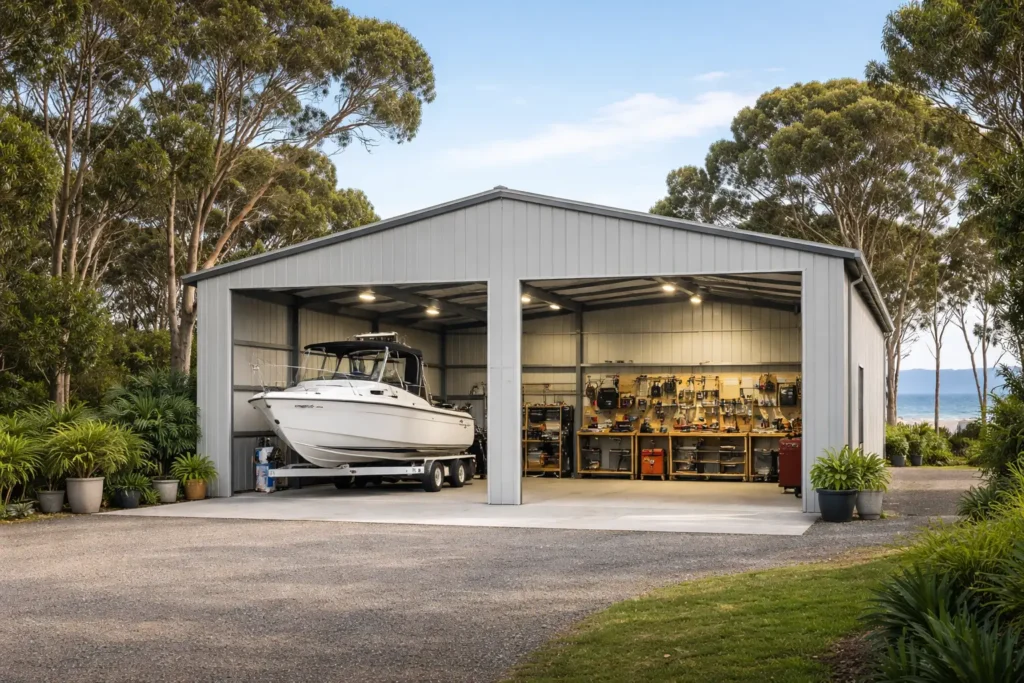
When people say “hangar,” they often picture aircraft only. I look at it broader. A Hangar Shed usually means you want clear-span space (less internal posts), big-door access, and enough height for awkward things like wings, masts, caravans, mezzanine storage, or a hoist.
I see Hangar Shed owners in the Whitsundays use them for:
– aircraft storage at private strips or airparks
– boat and jet ski storage (with room to rinse down)
– caravan and trailer storage
– trade workshops where you need height and flow
– lifestyle storage where you want shelves, a workbench, and breathing room
Hangar Shed costs in Australia
Let’s talk about money in a way that helps you plan, not panic.
I see two cost conversations that confuse people: 1) Structure and kit pricing (the shell, sometimes delivered, sometimes not)
2) Turnkey pricing (slab, drainage, doors, electrical, approvals, installation, and all the real-world extras you can’t ignore)
So I like to sketch costs in layers, because that reflects reality.
Typical cost ranges you can use for early budgeting
| Cost layer | What you typically include | What you often forget | Budget signal |
|---|---|---|---|
| Kit or structure only | Steel frame and cladding (varies by supplier) | Freight, install, site works | Lower upfront, more add-ons later |
| Installed shell | Frame, cladding, install labour | Slab, drainage, power, access | Mid-range reality check |
| Function-ready | Slab, drainage, doors, electrical basics | Lighting plan, insulation, security | Best “usable” benchmark |
| Fully customised | Office, mezzanine, lining, upgrades | Lead times, upgraded engineering | Highest but most tailored |
Now I’ll give you a simple way to spot where your quote sits. When one supplier gives you a low number, I don’t assume they “beat the market.” I assume they priced a different layer.
A reality check based on size
| Hangar Shed size feel | Example footprint | Who it suits | Budget notes |
|---|---|---|---|
| Small | around 12m x 12m | single aircraft, boat, or workshop | doors and slab still drive cost |
| Medium | around 18m x 18m | larger gear, more clearance and storage | structure and door tech matter more |
| Large | 20m+ spans | multiple bays, business use | engineering and site access carry weight |
What pushes Hangar Shed pricing up in the Whitsundays
I see the same cost drivers again and again:
– Span and height (clear span needs stronger structure)
– Door type and width (big openings need strength and smart hardware)
– Wind rating and cyclonic engineering (your region demands it)
– Corrosion protection (salt air punishes shortcuts)
– Slab and drainage (rainfall and runoff drive smarter site work)
– Access and logistics (tight driveways and wet ground slow installation)
– Fit-out choices (power, lighting, insulation, lining, storage, offices)
If you want a fast quote that actually helps, I measure the opening I need first. Then I plan the door. Then I size the building around that. Doors drive the feel of the whole place.
Designs that work well in coastal, high-wind conditions
A Hangar Shed on the Queensland coast needs more than good looks. I aim for a design that stays calm in ugly weather and stays low-maintenance in salty humidity.
Roof shapes and layouts I see most often
Gable roof (classic peak)
I like gable roofs because they feel timeless and they suit many door styles. They also suit ventilation options at the ridge.
Skillion roof (single slope)
I like skillion designs when you want modern lines or you need to manage runoff in a specific direction. They can look sharp, especially when you pair them with clean cladding colours.
Multiple bays (work bay + storage bay)
I recommend this when you want a “clean zone” for vehicles and a “dirty zone” for tools, washing down, or maintenance. You keep your space organised without turning it sterile.
Materials and finishes I prioritise near the ocean
I prioritise durability and easy cleaning.
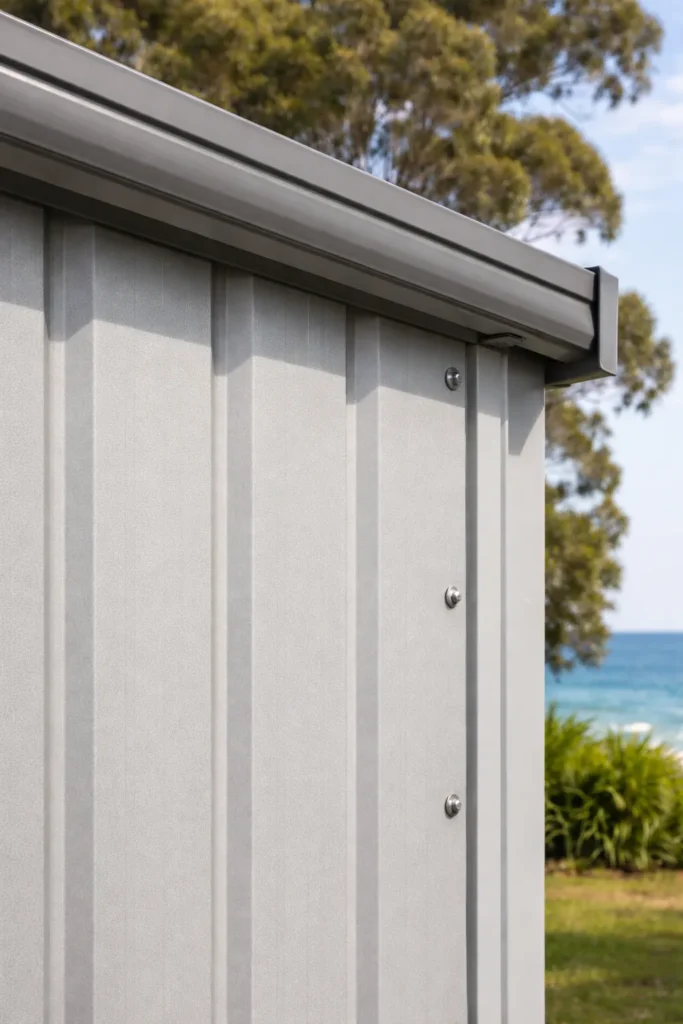
– I choose quality steel and coatings that handle coastal conditions.
– I choose fixings that resist corrosion instead of staining the cladding over time.
– I plan gutters and downpipes like they matter, because they do.
You can absolutely make a Hangar Shed look premium without turning it into a museum. I just avoid cheap choices that age badly.
Custom options that change how your Hangar Shed feels day to day
This section matters most, because custom options decide whether you love your shed or simply tolerate it.
Door options
Doors feel like the “front door” of a Hangar Shed. They also influence clearance, wind behaviour, and daily convenience.
| Door type | Why you might like it | What to watch |
|---|---|---|
| Sliding doors | Simple, robust, good for wide openings | Needs good track design and alignment |
| Roller doors | Easy operation, clean look | Wide doors need strong framing and quality hardware |
| Bi-fold doors | Big clear opening, aviation-friendly vibe | Higher cost, needs careful engineering |
| Hydraulic one-piece doors | Fast opening, dramatic look | Needs space and strong structure, costs more |
I always match the door choice to your use. If you open and close it daily, I make it easy, reliable, and safe in windy weather.
Floor, drainage, and “wet zone” planning
If you store boats, you will rinse them. If you rinse them, you need drainage. I plan for it early so the slab doesn’t turn into a puddle factory.
I like:
– a slab that supports your loads without cracking drama
– smart fall so water moves away from the door line
– enough apron space outside so you don’t bog tyres after rain
Lighting and power that feels modern, not harsh
I design lighting like a good outfit. I want clean coverage, no nasty shadows, and a little style.
I like:
– bright general lighting for the whole space
– task lighting over benches
– exterior lighting at entry points
– enough power points along walls so you don’t run extension cords like spaghetti
Comfort upgrades that pay off
In a humid climate, comfort features protect both you and your gear.
– insulation to reduce heat load
– ventilation that clears moisture and fumes
– whirlybirds or ridge ventilation to help airflow
– wall lining in key zones to keep the space tidy and reduce dust
Storage and mezzanine options
If you plan storage in advance, you keep the floor clear, and the shed feels bigger.
– mezzanine storage for lightweight gear
– heavy-duty racking for parts and tools
– a dedicated wall for hoses, lifejackets, and wash-down gear
How I choose the right hangar plan and builder
I choose a Hangar Shed builder the same way I choose an accountant. I want competence, clear communication, and a process that protects me from expensive surprises.
Here’s my checklist.
The questions I always ask before I say yes
- What wind rating and engineering do you include for my exact site?
- What coatings and fixings do you recommend for coastal conditions?
- What do you include in your price, and what sits outside it?
- Who handles approvals, drawings, and certifications, and what do I need to supply?
- What timeline do you expect, and what usually delays installs in this region?
- What warranty do you offer on structure, cladding, and doors?
The quote test that saves you money
I ask every builder to break the quote into:
– structure or kit
– installation
– doors
– slab and site works (even if they exclude it, I want clarity)
– electrical and lighting allowance
– optional upgrades
When two quotes look wildly different, I usually find a missing piece, not a miracle discount.
Before you lock anything in, I strongly suggest you check approvals and compliance for your block. I use Whitsunday Regional Council’s Building, Plumbing and Compliance guidance as a starting point so you know when you need a building approval and what you need to supply.
Conclusion
A Hangar Shed can give you serious lifestyle value in the Whitsundays. You protect your equipment, you simplify storage, and you create a clean space that supports work and play.
When you plan it properly, you win twice. You get a shed that suits your gear now, and you avoid rebuilding regret later.
If you want a Hangar Shed that fits your site and your lifestyle, start with your door size, your wind and coastal needs, and your approval pathway. Then request a detailed quote that spells out inclusions, engineering, and timelines before you commit.
Frequently Asked Questions
How much does a Hangar Shed cost in Queensland?
Costs vary a lot. I see kit-style prices start lower, and I see installed builds climb quickly once you add doors, slab, drainage, approvals, and fit-out. I always ask for an itemised quote so I can compare properly.
Do I need council approval for a Hangar Shed in the Whitsundays?
You often need some form of approval for building work. I check early because approvals can influence site placement, drainage, and even design choices.
What size Hangar Shed do I need for a boat or aircraft?
I start with your largest item, then I add clearance for movement, maintenance, and storage. Door width and height matter more than people think, so I plan those first.
Should I choose a sliding door or a roller door?
I pick based on opening width, how often you open it, and how your site handles wind and debris. Sliding doors suit wide openings well, and roller doors suit clean daily use when you choose quality hardware.
What custom options add the most value in the Whitsundays?
I put money into corrosion resistance, drainage, ventilation, and lighting. These upgrades make the space easier to use and cheaper to maintain over time.
Can I add a mezzanine in a Hangar Shed?
Yes, and I love mezzanines for storage. I make sure the engineer designs for the load and the layout supports safe access.
What should I do about condensation and humidity inside the shed?
I improve airflow and reduce temperature swings with ventilation and insulation. I also keep wash-down zones controlled so drying happens fast.
How do I compare quotes from different shed builders?
I compare inclusions line by line and I check engineering, door specs, coatings, and scope boundaries. I avoid “headline price” decisions, because hidden costs always appear later.