
Building a commercial shed is exciting – finally you’ll have room to grow your business or hobby. But before you start dreaming of equipment and storage racks, remember: building a shed can be like planning a road trip. You wouldn’t set off without knowing your fuel cost or tolls, and you shouldn’t sketch a shed plan without a budget.
In North Queensland’s climate, where tropical heat and cyclones add extra challenges, every dollar counts. Think of budgeting as a safety harness: it keeps your project on track and your wallet intact.
You might imagine a shed is “just some steel and cladding,” but trust me, there’s much more under the hood – earthworks, concrete, engineering, permits… the list goes on. One industry expert notes that in 2025, rising material prices and labour shortages make accurate budgeting more important than ever. In other words, don’t wing it. A well-planned budget will save you from nasty surprises (and overspending) down the line.
The Role of Professional Guidance in Your Shed Budget
That said, you don’t have to figure it all out solo. Early on, it’s wise to talk to professionals. For example, a Trusted Commercial Shed Builder can help you understand what your shed really needs for North Queensland. They know local wind ratings, soil issues, and what extras tend to blow up the price (spoiler: extra-high roofs and heavy machinery foundations can double the cost).
Getting a ballpark quote from an experienced builder helps ground your assumptions. Think of them like your co-pilot – they’ve seen the storms (literally) and can spot hidden costs so you don’t hit turbulence later.
Key Cost Components of a Commercial Shed
Now, let’s break down the big pieces of your shed budget. The major cost components typically are: site preparation and foundation, the steel building kit, installation labour, and all the extras (doors, insulation, etc.). Here’s a quick rundown with typical ranges (these are estimates – actual prices vary):
- Site prep & foundation: Earthworks, site clearing, and a concrete slab. Expect roughly $120–$350 per m². A light-duty slab might be ~$120/m², but if you need extra depth or reinforcement (for forklifts or heavy equipment) it can jump to $350/m².
- Steel building kit: The steel frame, roof, and wall cladding. Kits can range from about $150–$900 per m², depending on size, roof pitch, color, and extras. A simple garage could be at the low end; a complex industrial shed at the high end.
- Installation & labour: Getting the shed built (labour, cranes, certifications) often adds ~20–45% of the kit cost. In North QLD’s cyclonic zones, factor at the upper end (30–45%) due to stricter standards and hoisting equipment.
- Doors, windows & insulation: Large roller doors can cost between $4,000 and $12,000 each. Insulated roof panels or blankets run about $12–$80/m², but can slash internal temperatures by up to 10°C in our hot climate.
- Gutters & drainage: Stormwater drainage and guttering for large sheds might be $1,500–$8,000, depending on shed footprint and council requirements.
- Permits & fees: Council building permits, certifications, and fees typically add another $500–$4,000. Queensland has a special Code (QDC MP 3.7) that actually reduces red tape for farm or storage sheds, but there are still application and engineering fees to budget.
- Contingency: It’s wise to add about 10–15% extra. No one likes surprise costs (like deeper rock excavation or a pricey connection charge), so a buffer keeps your finances safe.
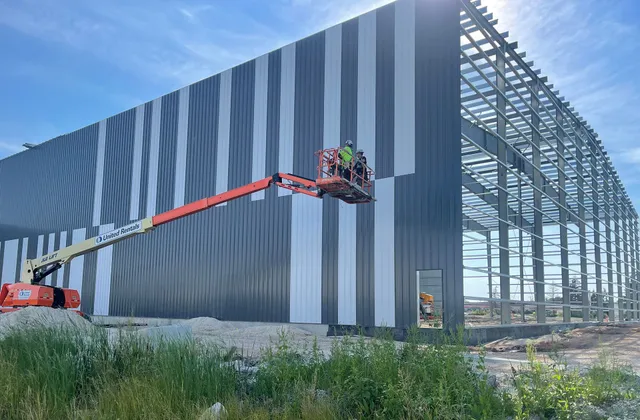
Cost Summary Table
| Budget Item | Estimated Cost Range | Notes |
|---|---|---|
| Steel building kit | ~$150–$900/m² | Small basic kits at low end; large custom warehouses at high end. |
| Concrete slab & footings | ~$120–$350/m² | Standard vs. heavy-duty (forklift-rated) slabs. |
| Installation (labour) | ~20–45% of kit cost | Higher % (30–45%) if cyclonic zone; else 20–35%. |
| Roller doors | $4,000–$12,000 each | Wide/heavy-duty commercial doors are most expensive. |
| Insulation/finishes | $12–$80/m² | Roof blankets or panels; keeps shed cooler. |
| Gutters & drainage | $1,500–$8,000 | Depends on building size and council rules. |
| Permits & approvals | $500–$4,000 | Building permit, development approvals, engineering checks. |
| Contingency | ~10–15% of total | Cushion for unexpected site issues or upgrades. |
Foundations and Slabs
With that breakdown in mind, let’s look closer at each big-ticket part:
Foundation and slab. Even a slight slope in your site might require extra work. Aim for a detailed soil report if you can – rocky or soft ground can add cost. As a rule of thumb, budget on the higher end per square metre for your slab, especially if heavy machinery will operate inside. Cutting corners here (like underestimating ground prep) often leads to expensive fixes later.
Steel Kit and Structural Costs
Steel kit & structure. The frame is the core of your shed. Basic Colorbond structures are common in Australia – they’re termite-proof and durable. A basic 10×10 m (100m²) kit might start around $15–30k, but again it depends on height, pitch, roof span and custom requests (mezzanine floors, awnings, skylights, etc.). Industry guides suggest a turnkey warehouse runs about $1,500–$2,500/m². That includes walls, roof, and floor (the “lock-up” stage). If you’re buying a kit and DIY-ing labor, you might spend closer to the lower end.
Labour and Installation in Cyclonic Regions
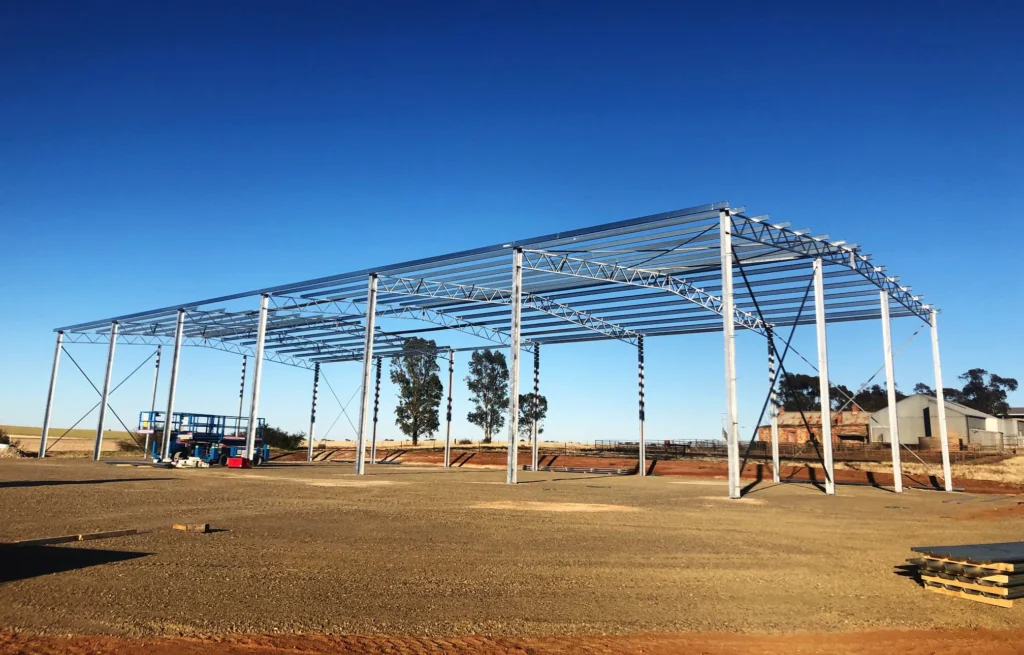
Installation (erection and labour). Once materials arrive, erecting a large shed is not trivial. Crane time, bolting, and certified welders add up. In an easy area, expect ~20–35% of the kit cost. Up here in North QLD’s cyclonic region, builders often quote 30–45% of kit cost for labour. In practice, if your kit is $100k, set aside ~$30k–$45k to have it put together safely.
Climate, Wind Ratings, and Compliance Costs
Local climate and compliance. North Queensland weather is no joke. We’re in AS/NZS wind Region C/D (cyclonic) in many parts, which means stronger steel sections, thicker connections and stricter bracing. This bump in specs can add roughly 10–30% to material costs. Western Sheds notes that higher wind regions (C/D) increase steel sizes and connections. So a shed in Cairns will cost more per metre than the same design in Melbourne.
Rain and humidity also matter. If you plan to store moisture-sensitive goods, consider extra corrosion protection or choose premium Colorbond or zincalume. To cut summer heat, you could invest in insulated roof panels or bulk insulation – the extra $12–$80/m² can be worth it, as it may drop inside temps by ~10°C and reduce aircon bills.
On the regulatory side, Queensland has some perks. Farm or storage sheds often qualify under the Queensland Development Code Part 3.7, which reduces red tape and costs for rural buildings. That means slightly simpler fire, lighting and signage rules for those structures. It won’t change your steel bill, but it can trim approval time and fees. Still, plan for about $500–$2,000 for building permit fees and certification.
Using Templates and Tools to Finalise Your Budget
Putting it all together: plan your budget. Now you’ve identified the pieces, it’s time to write them down. Use a spreadsheet or the budgeting tool on the Australian government’s small business site. In fact, the Business.gov.au budgeting template is a great free resource to list costs by category. As they advise, start by listing your fixed costs (e.g. land lease, insurance, loan repayments) and then your variable costs (materials, wages, utilities). For each item (steel kit, slab, labour, extras), plug in your estimates or quotes.
Once your numbers are in, review carefully. Can you trim some edges? Maybe a cheaper color option, or a slightly smaller door? Always keep your main needs in mind. Update this budget when you get real quotes, and compare actuals to your estimates – it helps catch any runaway costs early. The key is to use the budget as a living plan, not just a one-time guess.
Conclusion
By now you should have a solid sense of what goes into your commercial shed budget. Remember the big lessons: the steel kit and concrete foundation dominate costs, labor adds a big slice too (especially in a cyclone zone), and the little extras (doors, insulation, permits) can surprise you if forgotten. North Queensland conditions mean padding for cyclonic winds and heat.
The planning part really pays off. With this guide, you’re equipped to sketch a budget that isn’t just a wild guess. Next steps? Gather actual quotes from suppliers or a Trusted Commercial Shed Builder (they can refine these numbers). Use that Business.gov.au template to keep everything organised. And hey, if you’re unsure, don’t hesitate to ask for help – working with professionals might cost a bit up front, but it usually saves plenty down the line.
Now go forth and plan that dream shed with confidence! And if you found these tips handy, feel free to share your own shed-building story or advice below. Good luck with your build – North Queensland is calling your new shed home!
Frequently Asked Questions
How much does a commercial shed cost per square metre?
It varies widely based on size and spec. As a ballpark, industry guides put basic industrial sheds around $1,500–$2,500 per m² when fully built. A simple kit or smaller workshop can be cheaper (maybe a few hundred $/m²), while large warehouses with offices can push past $3,000/m². Always get quotes – but this gives a rough scale.
What are the biggest cost drivers for a commercial shed?
The top factors are size and design complexity. Taller walls, wider spans, or extra mezzanine floors increase steel and labour. Location matters too: North QLD requires cyclone-rated designs, which boost steel usage. Material quality (e.g. Colorbond grade) and foundation type (heavy load vs. light) also drive costs. Labour rates and site prep (clearing, leveling) can surprise you if not planned for.
How can I save money on my shed project?
Shop around for quotes and be clear about must-haves vs nice-to-haves. A standard colour or a smaller size can significantly cut costs. Sometimes buying a kit and assembling it yourself saves labour charges (just be honest about your DIY skills). Also consider phasing: build the core structure first and add extras (like insulation or fancy doors) later as budget allows. Never skimp on quality where it matters (e.g. wind-rated framing), but little trims can add up.
Do I need a council permit for a commercial shed in QLD?
Yes, most commercial/industrial sheds in Queensland need a building permit. However, agricultural or farm sheds often fall under a simplified code (QDC MP 3.7) that eases requirements. Still, plan on applying for approval. Budget a few hundred to a few thousand dollars for all application fees and certifier costs. Consulting a private building certifier can speed this up.
Should I include a contingency in my shed budget?
Absolutely. Aim for around 10–15% of the total budget as a buffer. Surprises happen: maybe the soil isn’t what you expected, or you decide on an extra mezzanine. Having contingency means your project can absorb these without halting construction. In short: better safe than sorry!
What is a realistic budget for a 200m² shed in North Queensland?
As a very rough example, using ~$1,500–$2,000/m² (mid-range turnkey cost), a 200m² shed could be around $300k–$400k all up (plus GST). If you opt for a simple kit or do some DIY labour, it might be less. If you include offices, premium cladding or a very heavy-duty slab, costs go higher. Exact figures really depend on your specs – this just illustrates the order of magnitude.