
Imagine standing in your backyard on a sunny afternoon, musing over where to stow your tools or set up that dream home gym. Suddenly the question hits you: should you grab a ready-made shed kit or go fully custom? It’s a classic Aussie dilemma. Both options can give you a solid, weatherproof space, but the experience and outcome can be quite different.
I’ve chatted with mates who swore by the bang-for-buck of a ready-to-assemble shed kit, and others who wouldn’t touch anything less than a tailor-made build. In this guide, we’ll weigh up Shed Kits vs. Custom Sheds down under – breaking down cost, time, durability, style and more, so you can pick the right fit for your project.
After all, whether it’s a DIY project to keep you busy on weekends or a hired professional job, there’s more to the story than meets the eye. For starters, a shed kit is basically a prefabricated package – pre-cut panels, walls, roof and all – delivered to your door with instructions. You (or a contractor you hire) put it together on site.
A custom shed, by contrast, is designed and built on location from scratch or from plans, so it can match any quirky shape or style you like. Both approaches have their merits. For example, you might browse options from Australia’s Trusted Shed Kits Supplier to see how convenient a kit can be, or consult a local builder about a fully bespoke shed. Let’s dive into the pros and cons of each.
Understanding Shed Kits and Custom Builds
Shed Kit (Prefab) – Think of this like Ikea furniture for your backyard. The supplier gives you metal or timber components cut to size: walls, roof sheets, doors, hardware and a set of plans. These kits often come in common sizes and Colorbond® colours, so you can pick a standard design and modify it slightly (like adding a window or roller door).
The advantage? Everything is prepared ahead of time for relatively quick assembly, and the cost usually only covers materials and delivery. You do need to prepare the site – leveled ground or a concrete slab – and have some basic tools or hire a tradesperson to help.
Custom Shed – This route is like hiring a kitchen cabinet maker for your storage space. You (or your designer/builder) work out the exact dimensions, materials and style from scratch. The builder arranges foundations, sources all materials (maybe timber framing or heavy-duty steel, glass windows, custom trim – whatever you want) and constructs the shed at your property.
It’s more work upfront (design, permits, excavation, etc.), but you end up with a truly one-of-a-kind structure. For example, if you want a funky shed that doubles as a backyard studio or matches an old Queenslander house, a custom build can make that happen.
Both approaches fall under the Building Code of Australia as Class 10a buildings (non-habitable structures like garages, garden sheds and carports). That means even kits have to meet code for structural strength and safety. In fact, local regulations often say you can install very small kits – say under 10–36 m² – without a full permit as long as they comply with code and setback rules.
For instance, a Queensland council notes that a simple shed (under 10 m², single-storey) can go ahead with minimal fuss. Likewise, Tasmanian guidelines allow prefab sheds up to 36 m² to be erected without a permit (just notify the council afterwards). So before you start, always check your local council’s rules – it might save you time and paperwork.
Cost and Budget: Counting the Dollars
One of the first questions is usually “How much will this set me back?”. In general, a shed kit saves on labour cost but offers less scope for going wild with design; a custom build lets you splurge on features but means hiring trades, so it’s pricier. Here are some key points:
- Upfront Price: Shed kits are typically cheaper up front. You’re mainly paying for materials and delivery. Custom sheds include labor in the quote, plus often additional charges (concrete slab, joiners, painters, etc.). For example, a 3 m×4 m steel kit might cost a few thousand dollars, whereas building that same shed from scratch could easily double once all trades are paid.
- Installation Fees: If you choose a kit and hire someone to assemble it for you, you’ll still pay for labour – though usually less than a full custom contract. If you do it yourself, you avoid that labour fee (although you need time and maybe a mate to help lift panels).
- Hidden Costs: Don’t forget extras. Both routes may need a concrete base, permit fees (if needed), and site prep (like clearing trees or digging footings). Kits often assume you have a level pad ready; with a custom build the builder usually handles the base. Also factor in extras like insulation, shelving, gutters, ventilation – sometimes kits charge extra for these, while custom builders can include them in the design.
- Long-Term Value: A well-made steel kit (think Colorbond® walls, sturdy frame) can last decades with almost no maintenance, holding its resale value. A custom shed built by a reputable tradesperson with quality materials can last even longer (30+ years) and be more weatherproof. If you skimp on a super-cheap kit, you might face repairs sooner. As one shed expert put it, “you get what you pay for.”
Here’s a quick comparison table to illustrate:
| Factor | Shed Kit (DIY / Kit Package) | Custom Build (Fully Contracted) |
|---|---|---|
| Upfront Cost | Lower (materials-only price) | Higher (materials + trades labour) |
| Total Timeline | About 1–3 days of building effort | 1–2 days onsite + prep time |
| Skills Needed | Basic DIY abilities | No DIY needed (builders do it all) |
| Permit Paperwork | You handle approvals and forms | Builder handles approvals for you |
| Customization | Limited by kit designs | Fully bespoke options |
| Maintenance | Typically minimal (e.g. steel kits) | Depends on materials chosen |
Each project and supplier will vary, of course. But generally, kits win on price and speed; custom wins on precision and personalization. For example, if you shop around, many Aussie kit suppliers list competitive package deals (and sometimes free delivery), whereas custom quotes will account for actual construction hours.
Time and Effort: Building It Yourself vs Hiring a Pro
Another big difference is who does the work and how long it takes. If you like weekend projects and have some DIY skill, a kit can be a fun challenge (and cheaper). If you’re short on time or building nerves, hiring a professional might be better. Let’s break it down:
- DIY Kit Assembly (You or a Mate): The upside is control and convenience. You don’t have to schedule a crew – once the kit arrives, you can start. With clear instructions and a helper, many small- to medium-size kits go up in a weekend. The process is straightforward: set the base, bolt together the frame, attach walls and roof panels, then doors. If you enjoy hands-on work, you get the pride (and blisters) of a job well done. Plus, no labour bill (except maybe a pizza for your helper). The downside is time and skill: it is a fair bit of work. You’ll need basic carpentry/metalworking skills, tools (drill, level, brackets) and maybe an extra hand for big panels. If something doesn’t fit right, you’re the one figuring it out. And as one shed-builder notes, scheduling your weekends around weather windows and drilling dozens of holes can eat up days.
- Project-Managed Build (Builder Takes Charge): Here, you hire out the headache. A professional takes care of everything – arranging permits, laying the slab, erecting the frame, sealing the roof. It usually gets done faster (crews can set up even a large shed in 1–2 days) and with guaranteed quality. It’s the “same materials, zero sweat” approach. The pros: you save time (and possibly avoid DIY mistakes), and the shed is certified compliant. The cons: builder fees add up. You’ll pay 30–40% extra or more compared to just buying a kit, to cover labour, insurance, supervision, etc. Plus, you have to pick a trustworthy contractor. One nifty advantage is that builders often coordinate all the little things: downpipes, termite treatments, panel alignments.
In short, if you have a full calendar or want a hands-off experience, project-management is appealing. If you crave a weekend challenge and savings, DIY is rewarding. Either way, assembly times are similar – the real difference is who’s holding the drill.
Durability & Quality: How Long Will It Last?
No one wants a shed that falls apart after a season of storms. Quality and durability often come down to the materials and build method.
- Material Matters: Many Aussie kits are made from galvanised steel or Colorbond®, which is rust-resistant and hard-wearing in our harsh sun and bushfire zones. Top-tier kits use thick-gauge steel framing and high-grade cladding, giving decades of life. Some home store kits might use thinner steel or even untreated wood, which can warp or rust more quickly. Custom sheds can use anything from premium steel to hardwood or premium cladding (like brick veneer, timber cladding, or corrugated iron). If you opt for timber in a custom design, ensure it’s pressure-treated for termites and decay.
- Construction Quality: A DIY kit relies on your precision: if it’s level and the screws are tight, it will perform well. A professional build often adds extra sealing, flashing, and correct installation of bottom rails to prevent water leaks and vermin ingress. One caution from experienced builders: cheap kits, especially those bought at hardware giants, sometimes skimp on things like a good quality floor or roof battens. For example, many custom builders note that big-box kits use “cheap lower-grade wood” for the floor, whereas a custom shed might have a solid pressure-treated timber or concrete base. Make sure your kit comes with everything needed (even the sill plates and screw flashing) or budget for those extras.
- Weather Resistance: Aussie weather can be unpredictable – sun, storms, hail or even the odd gale. Good shed kits are engineered for local conditions (our codes consider cyclonic wind zones). They typically include bracing and wind braces. If you live in a cyclone-prone area or want maximum peace of mind, you might pay a bit more for engineered specs on your kit or insist on it for a custom shed. Also think about insulation and ventilation: without good airflow or reflective insulation, a metal shed can get like an oven in summer. Many kit suppliers offer options like roof insulation or Whirlybirds; custom builders can integrate insulation easily too.
Overall, a well-chosen steel shed kit can be just as tough as a custom-built one, especially if it’s made with 100% Australian steel and assembled correctly. Just keep an eye out for warranties: many Aussie kits come with 20+ year color finish or rust-through warranties. In practice, a basic steel kit done right will easily last 15–20 years or more, while a custom timber shed (if well-maintained) can also run a long race.
Design & Customization: Creating Your Ideal Space
This is where personal taste really kicks in. If you’re picturing a standard shed (for lawnmowers and tools), a kit might be more than enough. But if you want something unique – a studio, a garage loft, a “she-shed” retreat – customization is king.
With a shed kit, you’re choosing from set models. You can usually pick the width, length, roof style (skillion vs gable), number and size of doors, and wall colour (Colorbond offers a rainbow of options). These kits come in popular configurations (e.g., 3×3m, 6×6m, 9×3m, etc.).
This means you won’t get exact sizes or odd shapes unless you order a custom kit design, which can get pricey. Many homeowners start with a kit design and maybe tweak one end wall or add a window. The trade-off is simplicity: you know exactly what you’re getting.
Custom sheds, on the other hand, can fit any dream. Want a barn-style roof, a little porch, or glass walls for natural light? It’s doable. Need it to match the quirky angles of an older home? No worries. Custom builders can deliver virtually any height and dimension (as long as regulations allow). If you want multiple rooms, plumbing, or electrical built-in, custom is the natural choice. Of course, all that design freedom comes at a price.
One thing kits can’t match easily is a perfect colour or finish match with your house. If that’s important, check if the kit colours suit your scheme. Many Aussies find the Colorbond palette flexible enough – even an “Urban” shed can look modern – but a custom shed could give you unique cladding (like a wood-look finish) for extra flair.
Nowadays, many Aussies are turning sheds into living spaces: home offices, gyms, hobby rooms or art studios. Either route can achieve that, but the time and cost will differ. A kit-based ‘she-shed’ might need more interior finishing (insulation, wall linings, power) which you can do yourself. A custom shed could include those in the build, but again, cost more.
In terms of style trends, shed kits have come a long way – there are now gable-roof kits, barn-style kits, even double-storey garage kits in Australia. They still tend to have a functional, utilitarian look. Custom sheds are free to follow any architecture (heritage, modern, rustic, etc.).
So if you love high-design or have a very specific vision, a custom solution will satisfy that itch best. But for most of us, a well-designed steel kit (especially with some touches like trim or skylights) looks perfectly sharp and practical in a backyard.
Permits, Foundations and Regulations
Whether kit or custom, you can’t skip the basics. A shed needs a solid foundation – usually a concrete slab or reinforced footing – and it must meet local building rules. Here are the essentials:
- Building Permit: In Australia, any non-habitable shed is Class 10a. Small kits (varies by state) often don’t need a formal permit. For example, Sunshine Coast Council says a tiny shed (≤10m²) up to 2.4m high can often be installed as “self-assessable” (no approval needed). In other areas, you might need paperwork if the shed is big or has engineering. Always check with your council or a private certifier before starting. Don’t assume kits automatically avoid approvals – you may still have to lodge some paperwork.
- Engineering and Compliance: Good kit suppliers typically include engineering to suit your site (wind zone, soil type) or require you to get it. Custom builds almost always involve engineered plans. This ensures walls won’t blow off in a storm and the structure handles local conditions. If you’re DIY-ing a kit, double-check you meet the same standards (especially in cyclone zones or bushfire areas where extra measures like extra anchors are needed).
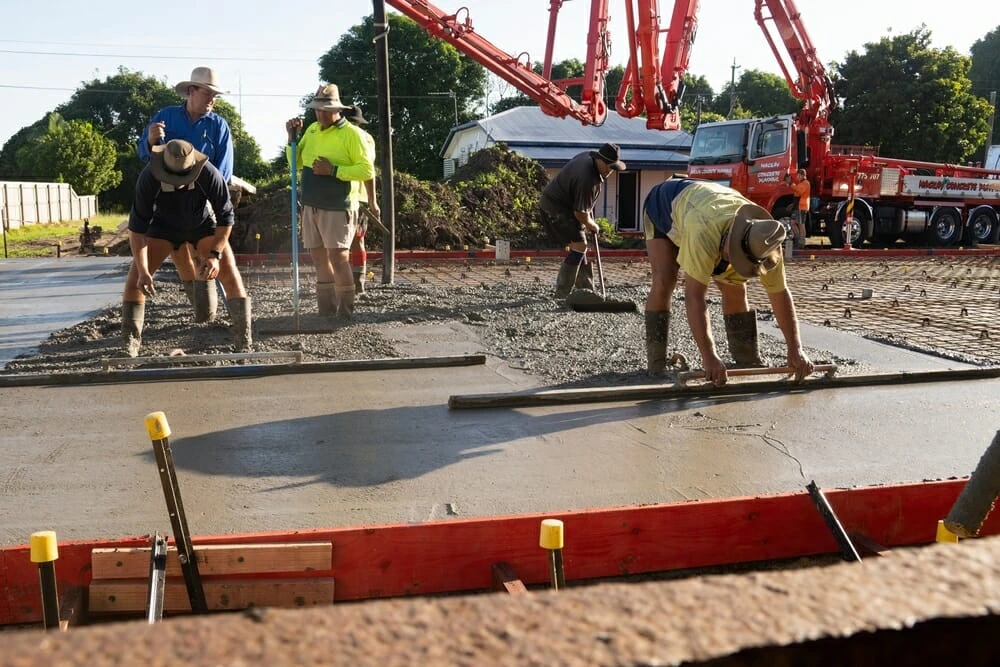
- Site Prep: You’ll need a flat, level surface. That usually means pouring a concrete slab or at least a compacted aggregate base. A level slab is crucial for both a kit and a custom shed to prevent wall panels from warping or doors jamming. You may need to arrange electricity or drainage if the shed will house power tools or a wash area.
- Other Rules: Even a shed must respect setback distances from boundaries (often 300mm to 1m depending on state) and not block easements. Some councils also treat sheds on rural blocks (farms) more leniently – e.g. Tasmania allows even bigger farm sheds (up to 200m²) without a permit. Again, local rules vary widely.
So, before that first concrete truck arrives, ensure your shed (kit or custom) ticks all these boxes. The good news is that most reputable kit suppliers will guide you on permits and provide compliant plans. Custom builders usually handle this seamlessly. In either case, doing it right from the start saves headaches (and fines) down the track.
Making the Decision: Which Path to Take?
At this point, you’re probably weighing what matters most: budget, time, customization or ease. There’s no absolute “one-size-fits-all” answer, but here are some final thoughts to help you decide:
- Pick a Shed Kit if you want a straightforward, affordable solution and don’t need anything too crazy in design. Kits are perfect for typical uses – storing a car, lawn mower, tools or using a basic workshop. If you’re handy and enjoy a project, building a kit can even be a fun weekend challenge. A kit is also great if you need a shed quickly and prefer spending money on materials instead of labour.
- Go Custom if you have a special vision, a weirdly shaped area, or need the shed for something unique (like an entertainment space or granny flat). Custom is the way to go if you lack time or skills – you’ll pay more, but the builders handle everything. It also might save you surprises if your site is sloped, or if you want integrated power, plumbing or high-end finishes.
- Size and Scope: Big, industrial-size sheds or multi-room workshop spaces often push toward custom simply because of engineering needs. Very small sheds (tiny tool sheds) often are simplest as kits, since they can be “self-assessable.” Medium sizes (like a typical 6×6 or 9×3) fall in the sweet spot where kits shine.
- Resale and Value: A nice new shed can add value to your property, especially if done well. A high-quality kit with good materials can be just as valuable as a custom shed, provided it’s sturdy and well-installed. Homespun “shack” sheds or poorly assembled kits might put buyers off, so consider that if resale is in your mind.
In the end, you know your needs best. If you’re still undecided, talking to both a reliable kit supplier and a custom shed builder for quotes and advice can help tip the scales. As one DIY enthusiast puts it: figure out your “must-haves” (size, features, finish) and your “nice-to-haves,” then choose the route that covers what you care about at the best price.
Conclusion
Building a shed is a fun journey, whether you’re following a kit manual over a cuppa or meeting daily with your builder at sunrise. The key takeaway is that both shed kits and custom sheds can give you a sturdy, long-lasting space in your Aussie backyard – it just depends on how you want to get there. Kits offer DIY satisfaction, lower cost and quick turnarounds, while custom builds offer precision, style and zero labor on your part.
Whatever path you choose, start with a good plan: measure your space, check local rules, and decide how much you want to be hands-on. Got your eye on a shed kit? Feel free to browse the range at Australia’s Trusted Shed Kits Supplier for design ideas. Thinking about custom? Now might be the perfect time to request a quote from a local builder or architect.
Ultimately, the “better” choice is the one that fits your needs, budget and peace of mind. Ready to get cracking? The weekend is coming. So whether you’re donning a tool belt or dialing the builder, take the first step today: secure that block, lock down your design, and before you know it, you’ll have a brand-new shed to call your own. Happy building!
Frequently Asked Questions
Q: Are shed kits easy to build for a beginner?
A: Yes, most shed kits come with pre-cut parts and clear instructions, so beginners can handle them. You’ll just need basic tools and a helping hand. If DIY isn’t your thing, hiring help is always an option.
Q: Do I need council approval for a shed kit?
A: It depends on the size and your local council rules. Small sheds often don’t need approval, but larger ones usually do. Always check before you start to avoid issues.
Q: Can I customize a prefabricated shed kit?
A: Yes, but only to a certain extent. You can choose sizes, colours, and add features like doors or windows. For major changes, a custom shed is the better option.
Q: Which material is best for an Aussie shed – steel or wood?
A: Steel is the top choice in Australia because it’s durable, low-maintenance, and weather-resistant. Timber looks great but needs more upkeep and protection from termites.
Q: What is the lifespan of a good shed kit?
A: A quality shed kit can last 20–30 years or more with proper installation and care. Regular maintenance like cleaning and minor repairs helps extend its life.
Q: How much cheaper is a shed kit compared to a custom shed?
A: Generally, a kit (materials + delivery) will cost significantly less than a fully custom build that includes labor. A ballpark rule is that professional installation could add 30–50% or more on top of the kit price. So if a kit is $5,000, having it custom-built might be closer to $7,000–$8,000 total. Exact numbers depend on size, features and local labor rates. It’s wise to get quotes for both options on your specific project.